
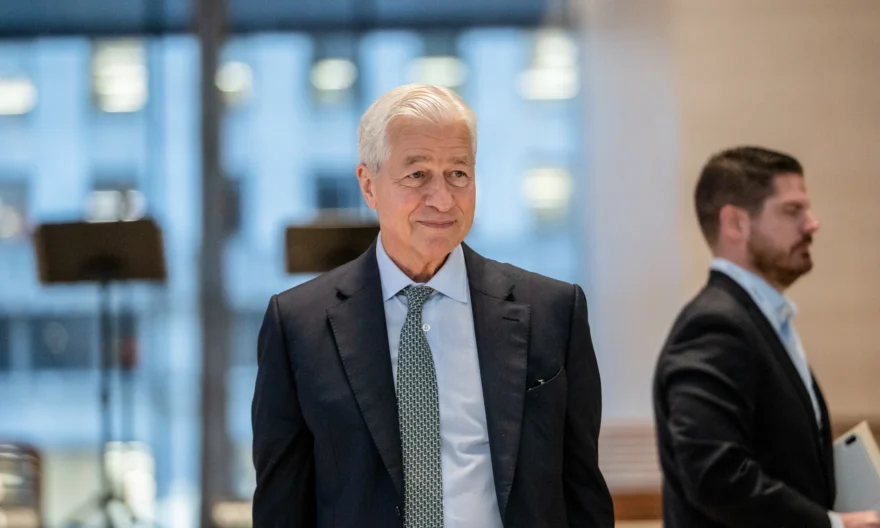
JPMorgan Chase is pushing back against a $5 billion lawsuit filed by Donald Trump, asking that the case be transferred from a Florida state court to the federal court system. The banking giant argues the legal complaint improperly names its chief executive, Jamie Dimon, claiming his inclusion violates clear legal protections for federally regulated banking officials.
The dispute stems from Trump’s allegation that the bank removed him as a client in 2021 for political reasons. The lawsuit seeks billions in damages and accuses the institution of unfair and deceptive practices. However, JPMorgan’s legal team contends the claims lack sufficient factual support and are structured in a way designed to keep the case out of federal jurisdiction.
Legal Strategy Centers on Jurisdiction
According to court filings, JPMorgan argues that Trump’s legal team relied on Florida Deceptive and Unfair Trade Practices Act, a state statute that does not apply to federally regulated bank executives performing official duties. Because Dimon was acting within his professional capacity, the bank maintains he cannot be held personally liable under the cited law.
By naming Dimon in the complaint, JPMorgan claims the lawsuit was strategically framed to ensure it remained in state court. The bank argues that removing him as a defendant clears the way for federal jurisdiction, given that the parties involved are from different states. For legal purposes, JPMorgan is considered a citizen of Ohio, while the plaintiffs are not, creating what attorneys describe as a clear basis for federal review.
The bank’s lawyers maintain that the inclusion of Dimon was not simply mistaken but legally unjustified. They assert the complaint attempts to sidestep established protections that shield federally regulated banking officials from certain types of state-level claims.
Disputing the Core Allegations
Beyond procedural issues, JPMorgan has also challenged the substance of Trump’s accusations. Attorneys for the bank argue the complaint does not present concrete evidence supporting claims that political motivations led to the termination of Trump’s banking relationship.
The filing notes that the lawsuit references a supposed blacklist but does not clearly define what such a list would involve, how it was created, or how it would be distributed within a heavily regulated financial system. JPMorgan contends that such claims are inconsistent with the strict federal oversight governing major financial institutions.
The bank further asserts that operating under extensive regulatory frameworks makes the alleged conduct implausible. Its legal response emphasizes that compliance requirements, reporting obligations, and internal controls limit the possibility of arbitrary or politically motivated actions of the kind described in the lawsuit.
Broader Implications for Banking and Politics
The case highlights growing tensions between political figures and large financial institutions. It also raises questions about the boundaries of corporate decision-making, customer relationships, and the extent to which political considerations may influence financial services.
Legal experts suggest the jurisdictional battle could significantly shape how the case proceeds. A federal venue would introduce different procedural standards and potentially narrow the scope of claims. Meanwhile, the outcome may influence how future disputes between political figures and regulated financial institutions are litigated.
JPMorgan has not publicly commented beyond its court filings, while representatives for Trump have yet to provide detailed responses addressing the bank’s arguments. As the jurisdiction question moves through the legal system, the case is expected to draw continued attention due to the high-profile individuals involved and the broader legal questions it raises about regulatory protections and corporate accountability.