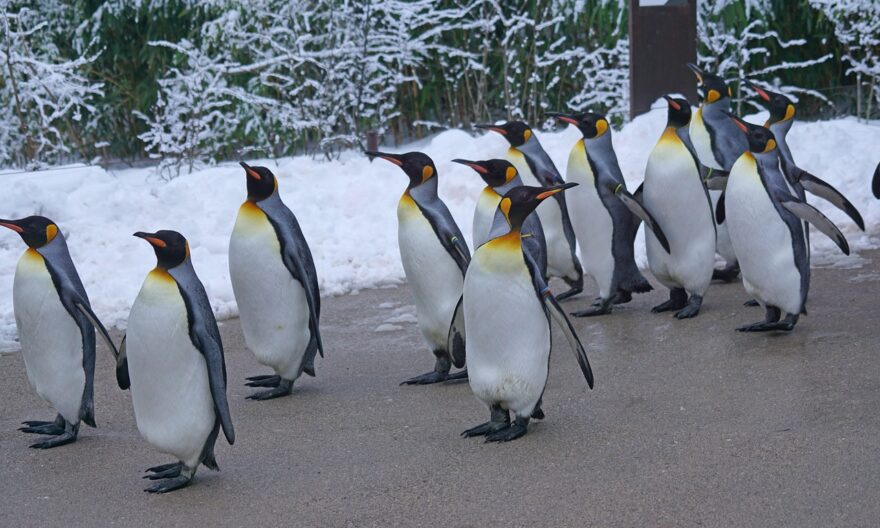
A remote volcanic island near Antarctica has lost its status as home to the world’s largest penguin colony after a dramatic decline in its population of chinstrap penguins.
Researchers from the British Antarctic Survey found that the number of occupied chinstrap nests on Zavodovski Island dropped by 63% between 2011 and 2025. More than half a million birds have disappeared during that period, representing more than a quarter of the island’s total penguin population.
The title of the world’s largest penguin colony has now shifted to Cape Adare in Antarctica’s Ross Sea.
Zavodovski Island Is Extremely Remote
Zavodovski Island is part of the South Sandwich Islands and sits more than 2,000 kilometers from the nearest permanent human settlement. Its isolated location and rough seas make scientific research there extremely difficult.
British Antarctic Survey researchers spent about 15 days traveling across stormy waters to reach the island. Once there, they used drones, aerial photographs and tracking devices attached to individual penguins to study the colony.
The research showed that chinstrap penguins are now declining faster on Zavodovski than anywhere else in the world.
Warming Seas Are Affecting Their Food
Scientists believe climate change is the most likely explanation for the population collapse.
Chinstrap penguins depend heavily on Antarctic krill, small marine animals that make up most of their diet. Krill rely on sea ice for food and shelter, making them particularly vulnerable to changes in ocean temperatures.
As surrounding waters warm, krill have shifted farther south toward the Weddell Sea. However, the penguins cannot easily follow their food source because sea ice and a lack of suitable breeding islands create a barrier.
Researchers say this combination is putting increasing pressure on the species.
Another Penguin Species Is Doing Better
The changes on Zavodovski have not affected every penguin species in the same way.
Macaroni penguins, which also live on the island, increased by about 28% between 2011 and 2016 and have remained relatively stable since then. Their more varied diet allows them to rely on fish and other crustaceans when krill become less available.
That contrast gives scientists further evidence that changes in food availability and ocean conditions are contributing to the decline of chinstrap penguins.
Scientists Ruled Out Other Causes
Researchers also examined several possible explanations for the decline. They found that the island’s 2016 volcanic eruption did not match the timing of the population decrease because the decline had already begun years earlier.
Competition for nesting areas was also considered unlikely because plenty of suitable breeding habitat remains available. Scientists additionally noted that krill harvesting is prohibited in the marine protected area surrounding the island, although the wider effects of fishing in connected waters remain uncertain.
A Warning for Antarctic Wildlife
The sharp fall in chinstrap penguins is raising concerns about the future of the species. The South Sandwich Islands contain a significant share of the world’s chinstrap population, meaning continued declines could have consequences far beyond Zavodovski Island.
Scientists say the combined losses across Antarctica could eventually lead to the species being considered for an endangered classification.
The findings also show how climate change can affect wildlife in places that appear untouched by human activity. Even one of the planet’s most isolated ecosystems is experiencing major changes as the Southern Ocean warms.
For chinstrap penguins, Zavodovski Island has become a powerful warning about how quickly a changing climate can reshape an Antarctic ecosystem.