
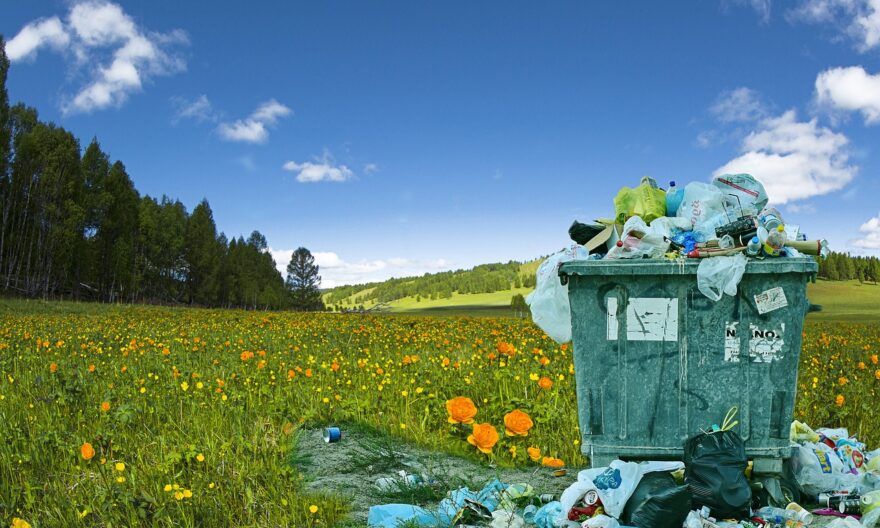
The Great Pacific Garbage Patch, located between Hawaii and California, is often described as one of the largest concentrations of ocean plastic on Earth. Stretching across an area more than twice the size of Texas, it contains vast amounts of floating debris that continues to break down over time.
While much attention has focused on the visible pollution in the ocean, new research suggests the problem may extend far beyond the water’s surface. Scientists now believe that as plastic fragments collide and degrade, they release tiny particles that can become airborne and travel into the atmosphere.
These microscopic and nanoscale plastic particles are small enough to be lifted by wind, where they may interact with sunlight and potentially influence the Earth’s climate system.
Microplastics and Their Role in Atmospheric Warming
A team of researchers from China and the United States examined how airborne plastic particles behave once they enter the atmosphere. Their findings indicate that these particles do not simply float harmlessly in the air but may also play a role in warming the planet.
The study focused on microplastics, which are extremely small plastic fragments, and nanoplastics, which are even smaller and often invisible without advanced equipment. Scientists analyzed how these particles interact with sunlight, particularly whether they reflect or absorb energy.
The results showed that colored plastics—especially darker shades like black, red, blue, and yellow—tend to absorb significantly more sunlight than clear or uncolored plastics. In some cases, the absorption rate was dramatically higher, causing the particles to retain heat much like dark fabric exposed to sunlight.
Researchers also found that smaller particles tend to stay suspended in the air for longer periods and absorb more energy relative to their size. This means nanoplastics could have a more persistent atmospheric impact than larger fragments.
How Plastic Changes Over Time in the Environment
Another important finding from the study is that plastic particles do not remain unchanged once they enter the environment. Exposure to ultraviolet radiation from sunlight can alter their properties over time.
Some lighter-colored particles gradually become more yellow, increasing their ability to absorb heat. In contrast, certain red plastics may fade, slightly reducing their warming effect. However, researchers observed that many particles tend to darken as they age, which enhances their heat absorption overall.
This transformation suggests that the environmental impact of plastic pollution may increase over time, rather than decrease as materials break down.
Scientists believe that turbulence in ocean systems, especially in large swirling zones like the Great Pacific Garbage Patch, helps propel more plastic into the air. When particles collide in these dense areas, they are more likely to break apart and enter atmospheric circulation.
Climate Effects and Scientific Uncertainty
Although researchers emphasize that the overall warming effect of airborne microplastics is still relatively small compared to major climate pollutants, the findings are significant in the broader context of environmental change.
Some estimates suggest that the warming influence of plastic particles could be comparable to a portion of black carbon emissions, a known contributor to global warming. In heavily polluted ocean zones, the effect may be even more pronounced.
However, scientists also caution that there are still major gaps in understanding how much plastic is actually present in the atmosphere. Measuring and tracking these particles remains difficult, and estimates vary widely.
Experts agree that more research is needed to determine the full scale of the issue. While the climate impact may currently be limited, it could grow if plastic production and environmental breakdown continue at current rates.
Many researchers also stress that the most immediate concern related to microplastics remains their potential impact on human health and ecosystems, which is still not fully understood.